
What does a company that makes its own robots actually look like on a Friday afternoon?
I wanted to see it, not just describe it. So this morning I said it out loud in the studio: “We need to be producing our products daily and simulate it, meaning, we make our own robots, all 3 models.” By the end of the day there was a factory floor in Red Hook building all three AREMES Interdimensional Suits, right next door to the logistics hub we opened the day before, with fifty dock doors and a hundred trailers waiting for whatever comes off the line.
Two divisions, two buildings, one walk between them. AREMES Robotics makes the suits, and AREMES Logistics moves things, and both of them are open right now in your browser and in a headset. Want the tour? Let’s walk it together.
The Yard
AREMES Logistics lives in a place I call the Yard, which sits on the real Red Hook terminal paving at the end of Union Street, turned to match the line of the Pier 10 wharf. The two ship-to-shore cranes that still stand on Pier 10 are there too (red, white and blue, placed exactly where New York State’s aerial photographs show them), and you can see them from the dock!
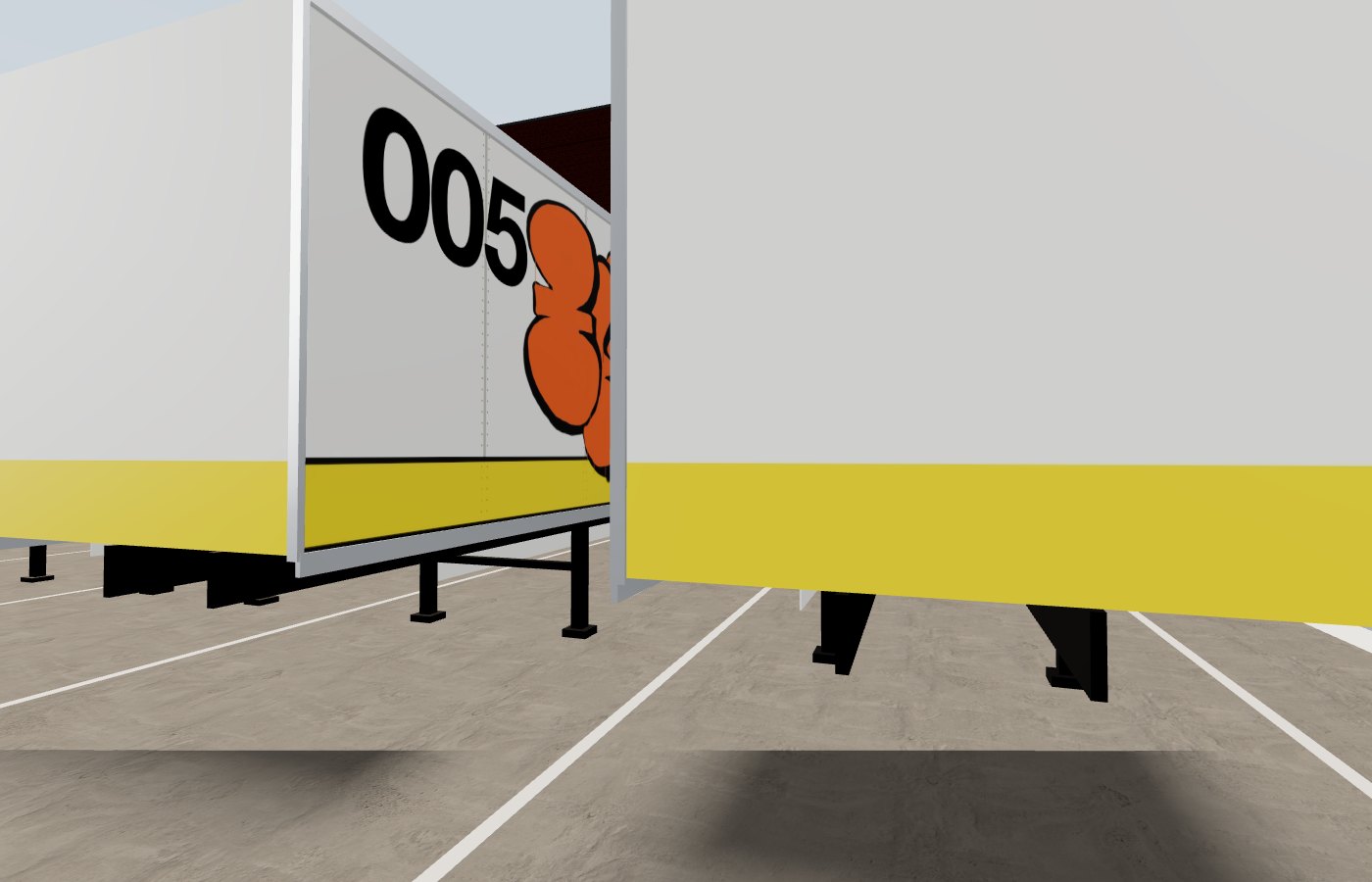
The building is a cross-dock, the kind of warehouse where trucks back in on both long sides and the freight crosses the floor from one to the other. It is 350 feet long, with a hundred trailers in the yard. Seven of them are backed in with their doors swung open. You can walk right up the dock and into them, some half loaded and some empty. Go look inside one, it is strangely satisfying!
Inside, I wanted “a real logistic depot… stacks and shelves all filled,” and that is what we built. The racks are real selective pallet rack with navy uprights and yellow beams, built to dimensions a warehouse engineer would recognize, and every pallet carries AREMES cartons in the six sizes from my Graphics Standards Manual, printed with our own packaging graphics. FCS001 robots work the aisles and the staging lanes while you wander around them.
Then I put on the headset and walked it, and the walls were bare. Oh no. “The inside of the logistics building needs art on the walls!” So now there is art all over it: the tractors, the vehicles, the suits, and four Physio Drive reliefs in yellow, navy, white and gunmetal over the east doors.
And outside? “Vandals got into the trailer yard.” I placed my own graffiti on the trailers and the alley wall myself, in Photoshop, on flat true-scale drawings of every surface, and I let it run right over the fleet numbers. A logistics yard in Brooklyn with no paint on it would be lying to you (the painted subway cars of the 1980s taught me that a long time ago).
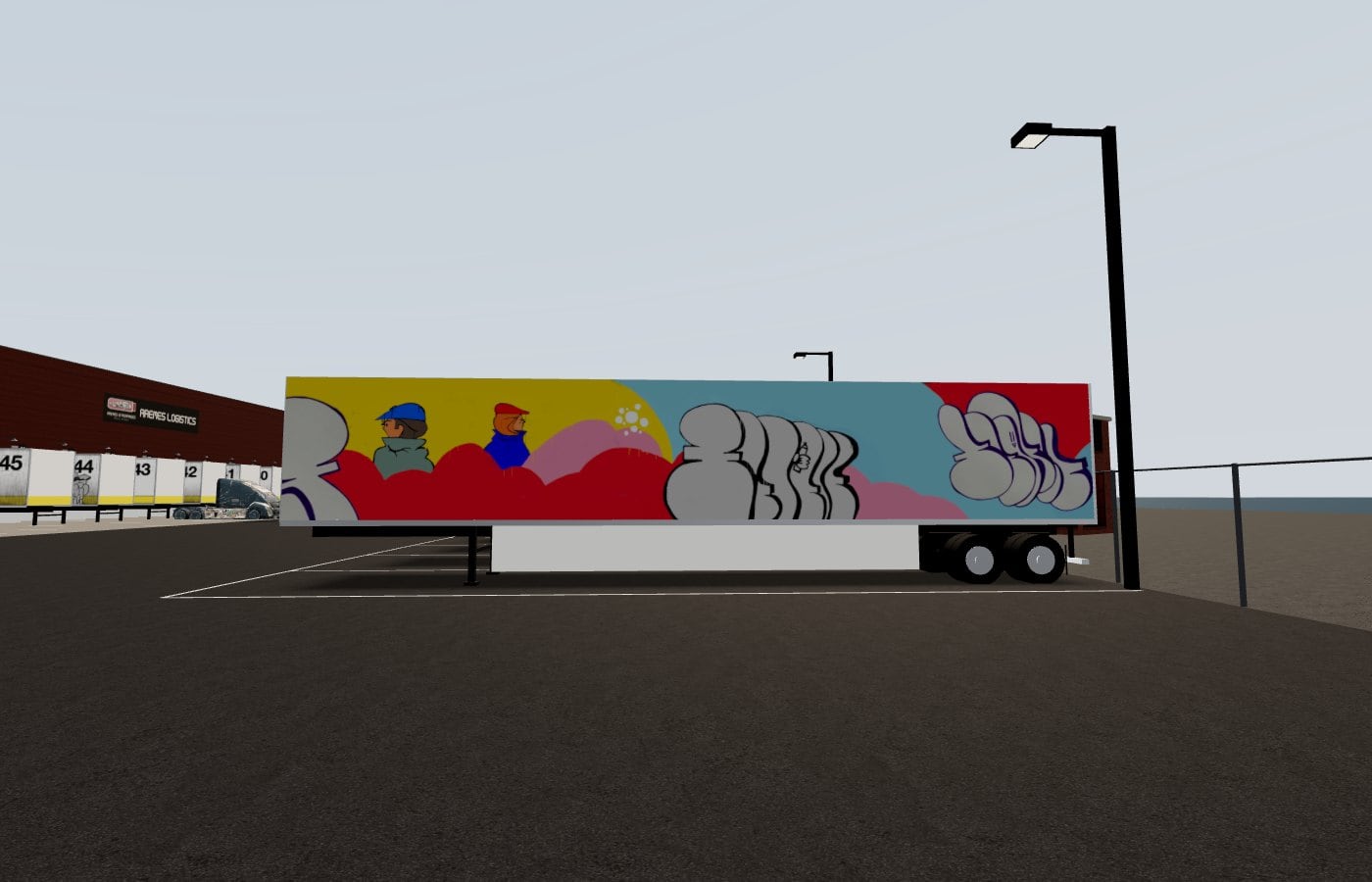
The tractors are my own designs too, built at the width of a real electric day cab. No fuel tanks, no sleeper cabs. They don’t need either one.
Through the Yellow Door
AREMES Robotics runs a place called AREMES Robot Works, and you get there through a yellow door in the west end wall of the hub. Follow the yellow line on the hub floor and the hanging signs, and walk through. You are standing on the factory floor.
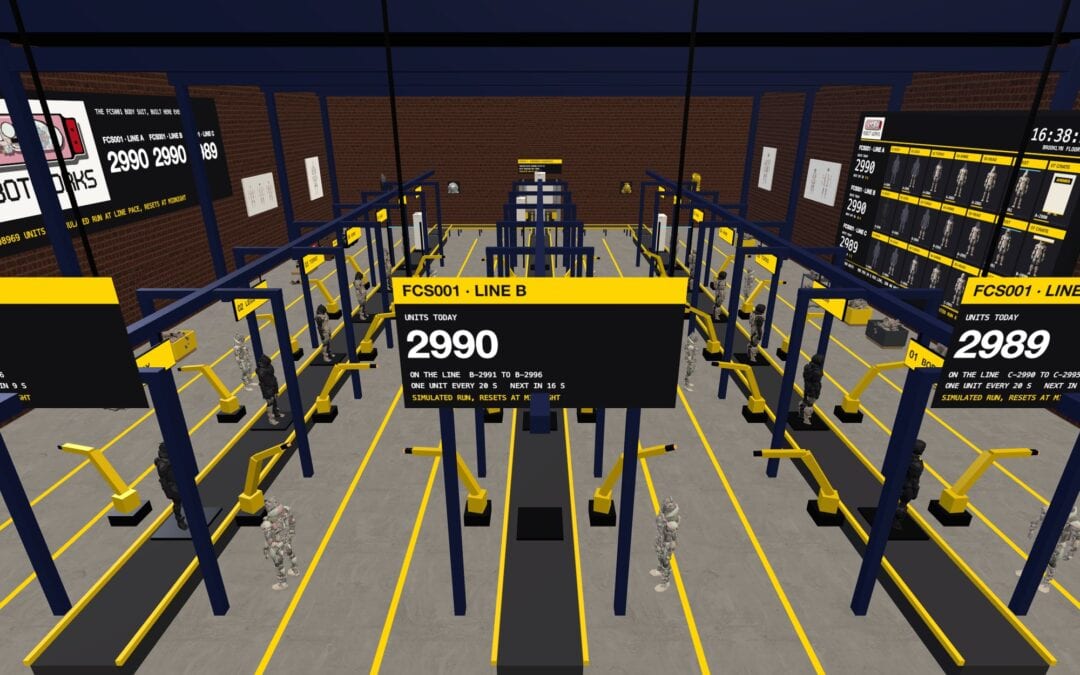
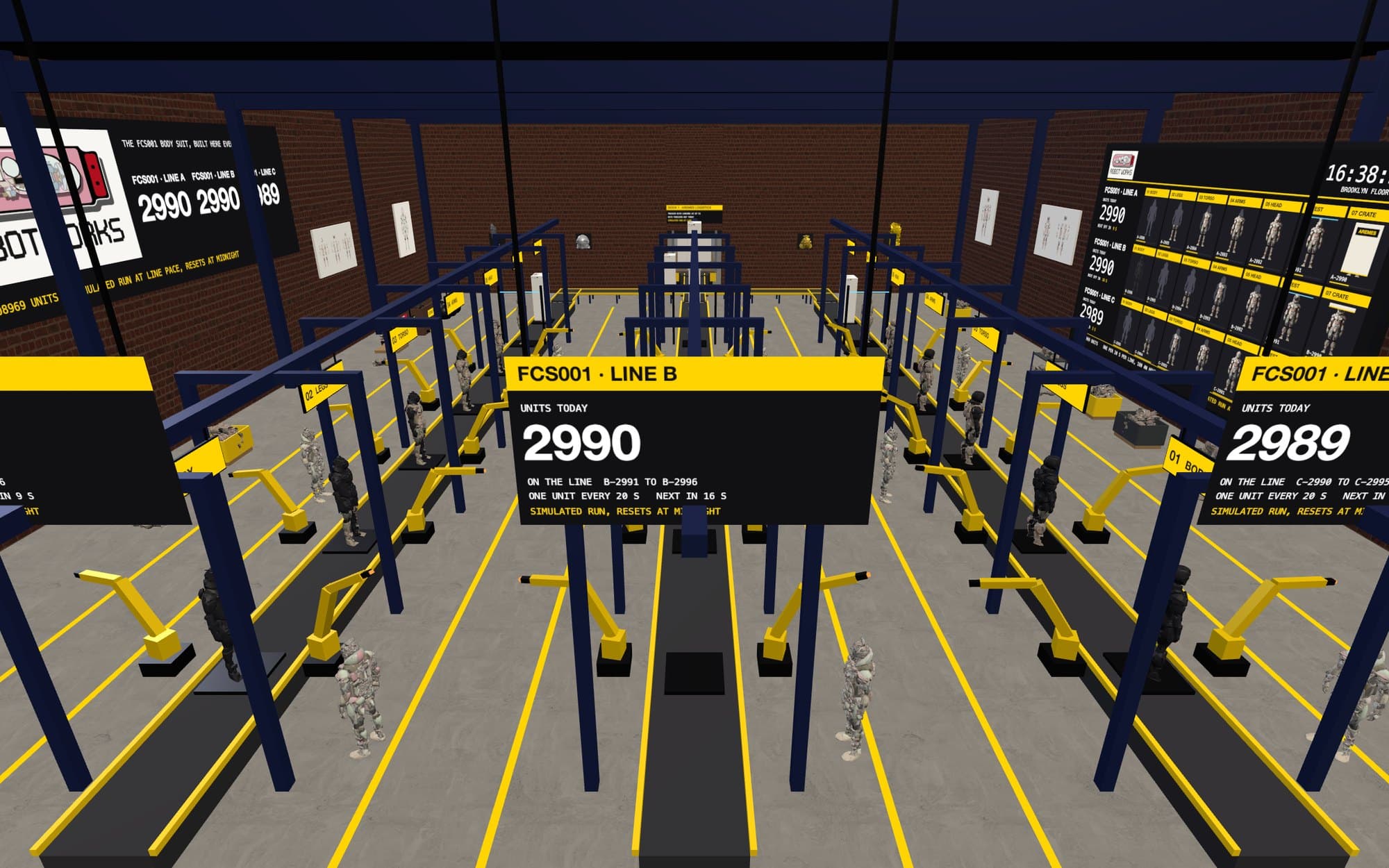
Three lines run the length of the hall, FCS001 Lines A, B and C. All three make the same robot, the FCS001 Inter-Dimensional Body Suit, and each line gives it its own helm. Each line has seven stations, and I want to walk you through them in order, because the order is the whole story. At station 01 a black body rises up out of the belt. At 02 each leg rises from below and locks onto it. At 03 the two chest halves slide in from the sides, first one, then the other. At 04 each shoulder swings in from straight out and closes. At 05 the helmet drops on and caps the whole thing. Then the finished suit turns once on a test table while a scan bar runs over it at 06, and at 07 it goes into a real AREMES carton, the XXXL, printed with the packaging graphics from my Graphics Standards Manual.
My first version of this was wrong, and I knew it the second I saw it. The suits were built on a steel frame, and hoists lowered the parts on from the ceiling, one by one. It worked, and it looked like a factory, but it did not look like AREMES.
So I said the thing that turned it around: “Think more of my animation where the suit adheres itself to the body.” In December 2021 I made a short animation for the Future Self series where the suit puts itself on a man in a black shirt. The headset clamps over his eyes, the chest plates slide in from the sides, the shoulders lock, and a white dome helmet caps the top. That is how AREMES suits get made.
They are not assembled. They adhere.
Now every part flies in on its own and snaps into place, moving in steps the way my 2021 parts did, overshooting a little and then holding still, with a small pulse of light at every lock. Watching one suit come together is fun. Watching three lines of them going at once, from the walkway, in a headset? I could stand there all day!
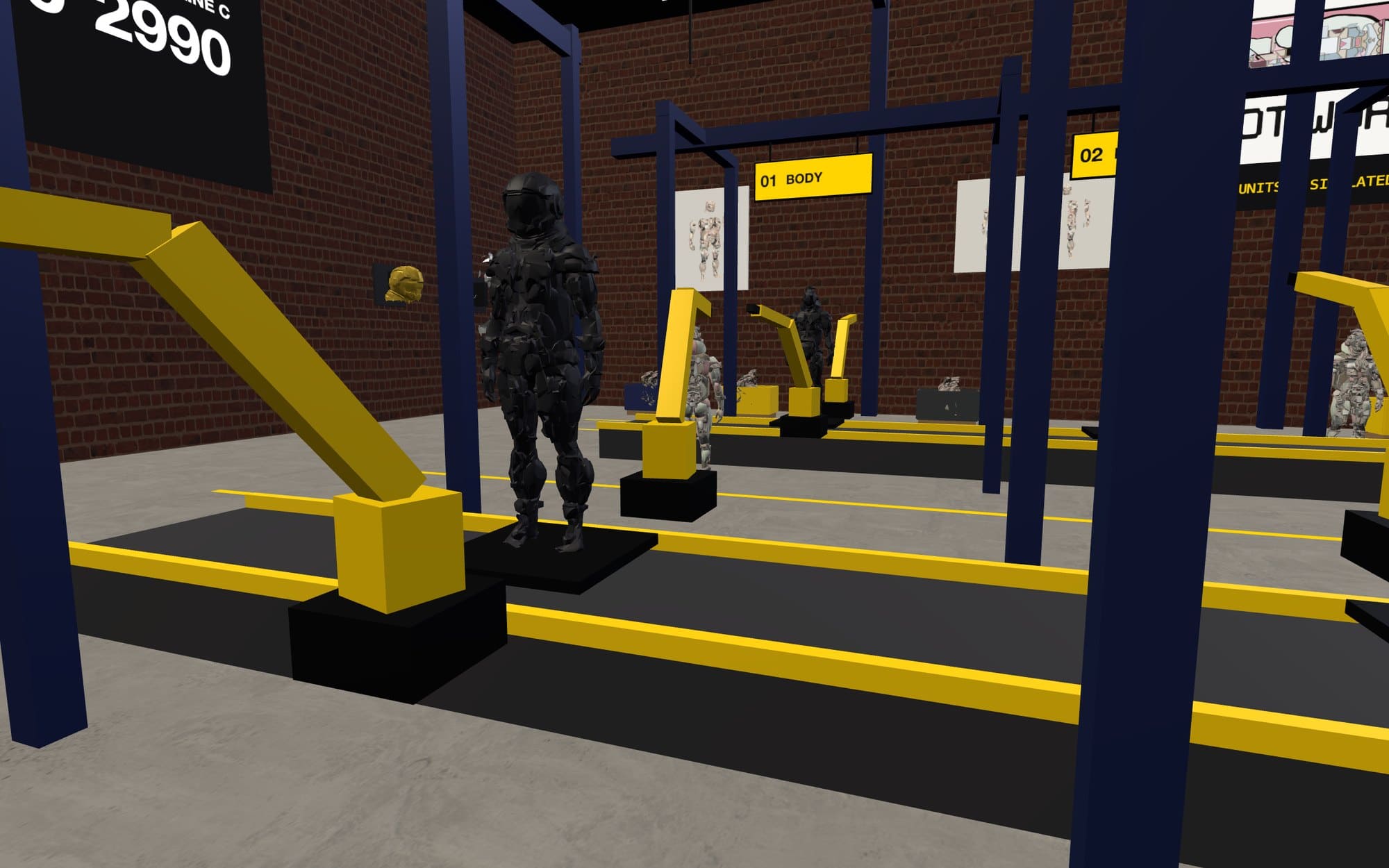
Then I walked it again in the headset, and it was far too clean. A real factory has some mess to it, so I asked for it: “make it look like a factory.” Now there are totes heaped with parts on pallets along both walls, parts carts with a helm on every shelf, a scrap skip full of scorched and broken pieces, a pallet of rejects tagged at the test station, and bags of waste by the wall. Eight deep canvases of the suits taken apart hang between the columns, and single polished parts stand off the brick on brackets as reliefs. The place has its own logo now too, the AREMES capsule over ROBOT WORKS in the same Digital tech letters as our wordmark.
How the Run Works
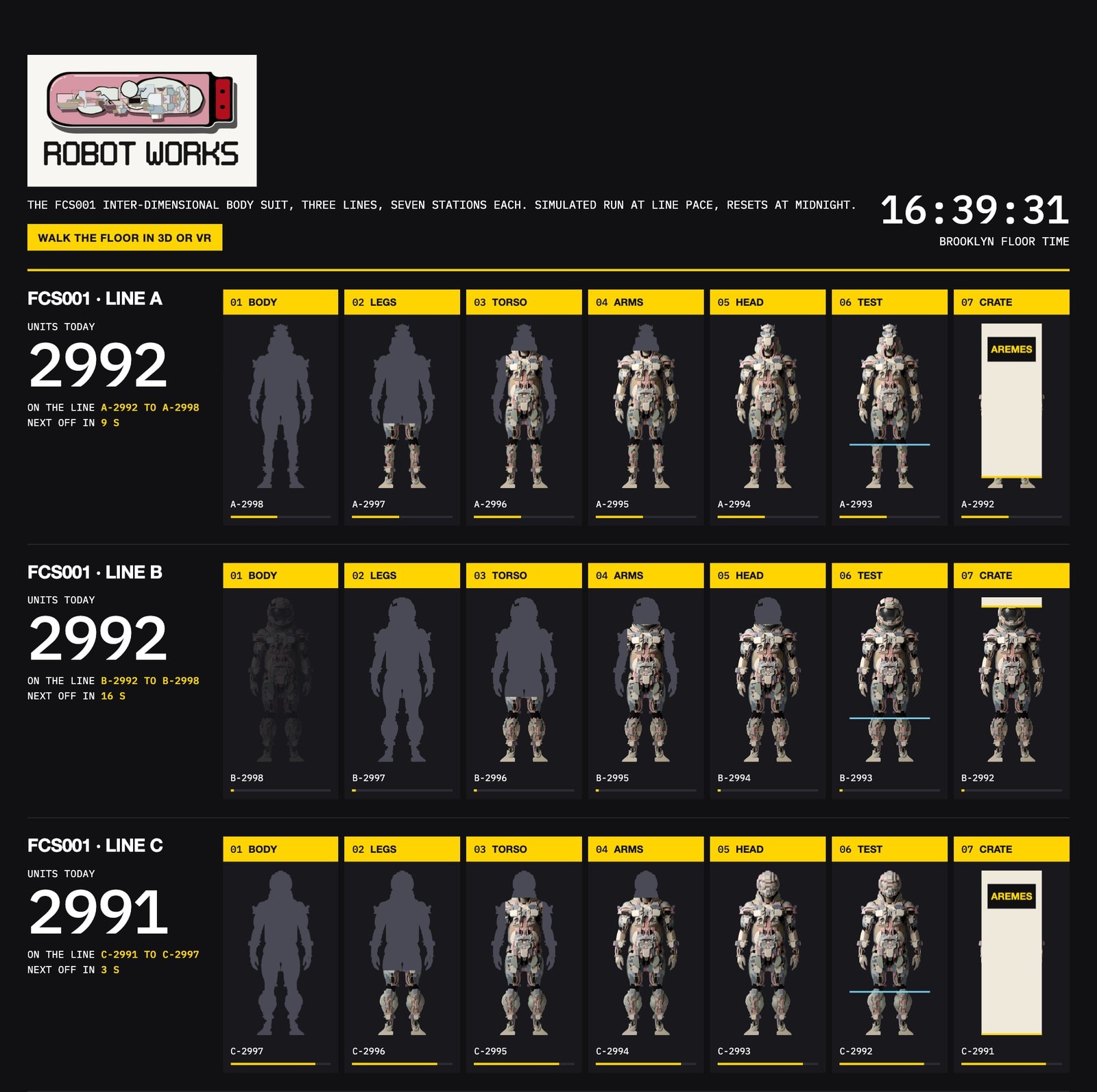
Every line finishes one suit every twenty seconds, and the count starts fresh at midnight. By the end of a day the three lines have made close to thirteen thousand suits.
Well, here is the honest part, and I want to say it plainly. Those numbers are a simulation of the line’s planned pace, not orders and not sales, and every board in the building says so. Nobody bought thirteen thousand suits today (I wish!). What the counts give you is the rhythm of the place, a factory that runs whether you are watching or not and starts over every night.
Every factory floor needs a control room, so Robot Works has a run board. It shows every station on all three lines at once, each suit drawn exactly as far along as it is on the floor at that very second. It hangs on the long wall of the hall as a giant screen, and it lives on its own page too, built to work on your phone. Open the board on your phone while you walk the floor in your headset, and you will see they agree, because they run off the same clock.
How We Built It
Just like with the Vehicles, I want to be open about the stack, because I think of these tools as mediums and I have always loved taking on new ones. I built all of this with Claude, my AI collaborator, working in the terminal on my iMac in the studio, and I made every call along the way (and yes, I said no plenty).
Step 1: Start from what already exists. The suits came out of my FCS001 parts sheet through Meshy last week, so nothing new had to be invented for the factory.
Step 2: Make them light. A full suit is heavy, and a whole floor of them is way too much for a headset. Meshy rebuilt each suit as a lighter close up version and an even lighter far away version, the view swaps between them as you walk, and the worker robots were slimmed down with meshoptimizer. The view from the door went from 634,000 triangles to 211,000, which your headset will thank you for.
Step 3: Cut the suits into parts. Each suit’s own mesh is split by height and by the gaps between the arms and the body, into legs, chest halves, arms and helmet. Every part you see flying in is a real piece of the real suit, and I love that.
Step 4: Animate it like it is 2021. Oh yes, this was the fun one! Steps on twos, a little overshoot, then a hold, which is how I have always keyed my animations by hand (haha, some things never change).
Step 5: Draw the board. The same parts get cut from flat views of each suit and redrawn every frame, set in Helvetica Neue and IBM Plex Mono.
Step 6: Put it in the world. It all runs on three.js and WebXR right in the browser, with no app to download, and the door from the Yard and the door back were the very last pieces.
How AREMES Ships
So how does anything actually leave this place?
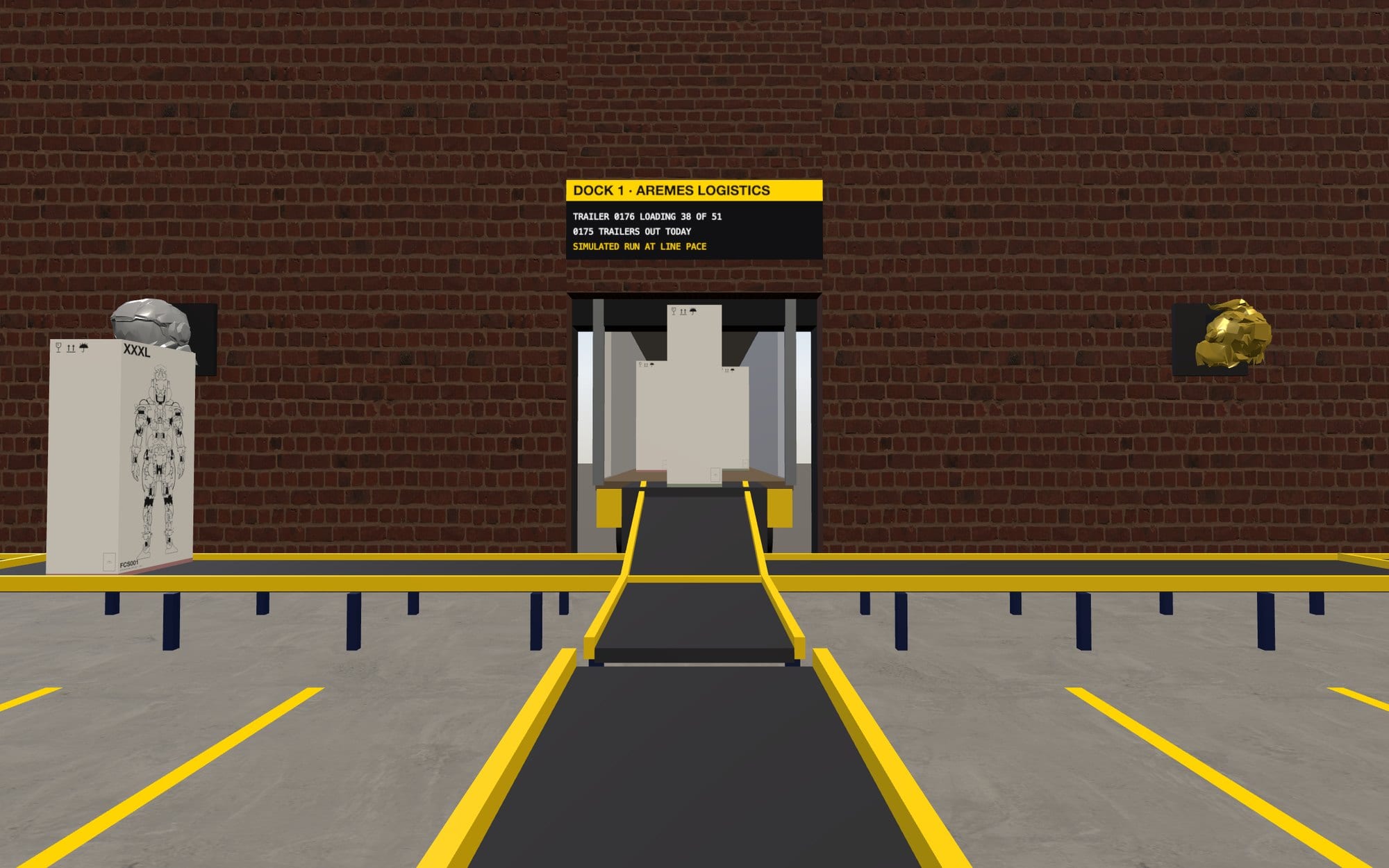
Inside the world, every finished carton rides a belt off the end of its line and onto one long conveyor that climbs to Dock 1 in the east wall. An AREMES Logistics trailer is backed in there, waiting. It holds 51 cartons, and when it is full it pulls away and the next empty one backs in, about every six minutes, all day long. That is the story the buildings tell, and I love telling it.
Outside the world, everything AREMES ships is digital, and it ships right away. You pay by card through Stripe, and a signed download link arrives the moment the payment goes through, good for a month. An AI agent can do the very same thing on its own, paying in USDC, and the files come back with its receipt. No warehouse and no truck. The trailers carry the idea, and the internet carries the files.
What You Can Buy
There are three new things you can take home, starting today.
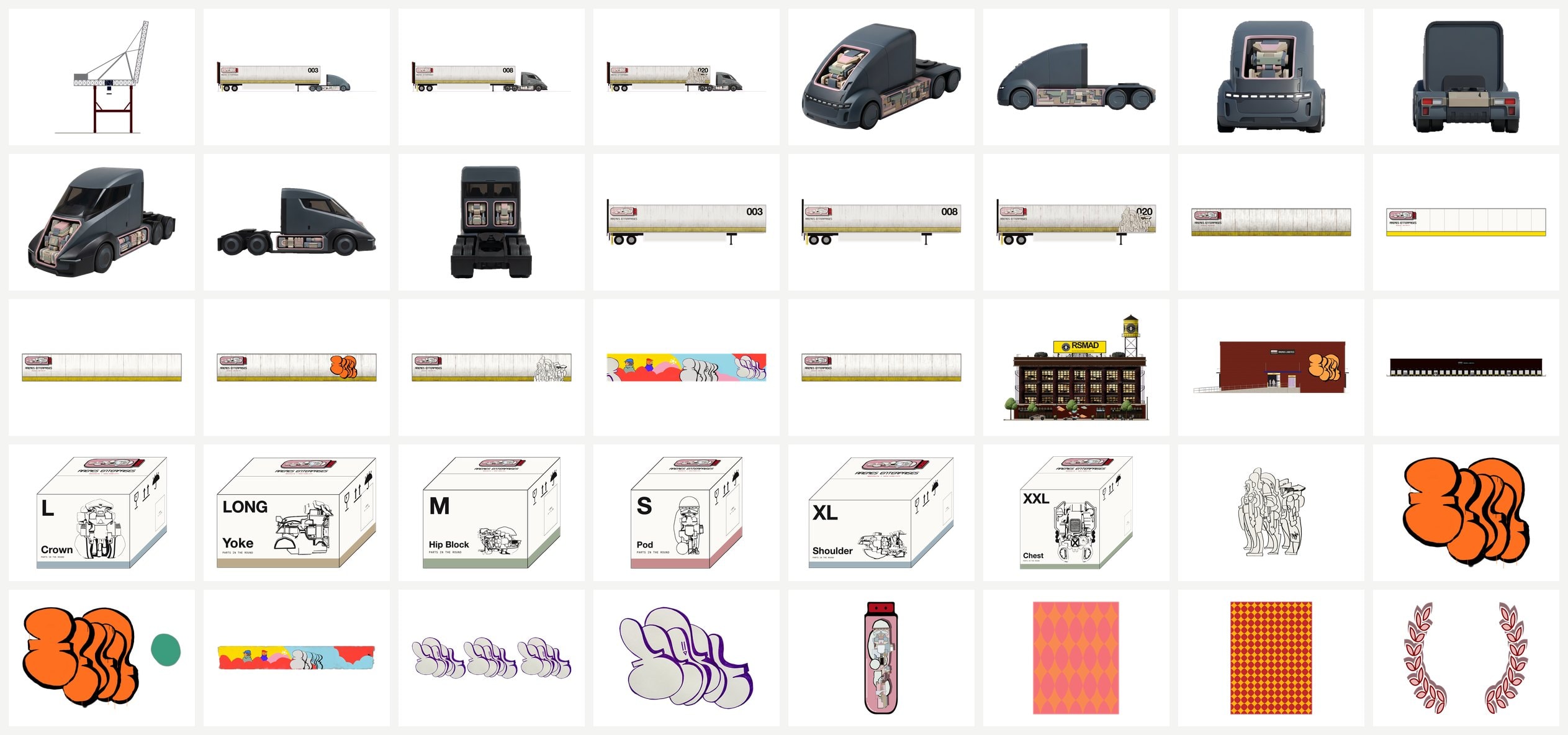
The AREMES Logistics Kit is 40 transparent PNGs from the Yard and the street: the buildings, the tractors and trailers, the cartons, the graffiti and the grounds. It is $95.
The AREMES Fleet in 3D gives you both tractors and the 53 foot trailer as GLB and USDZ files, at real size and ready for AR. It is $450.

The AREMES Suit Parts Pack is all three versions of the FCS001 cut into the parts the line uses, so you can rebuild them, remix them, or put them on a body of your own. It is $450.
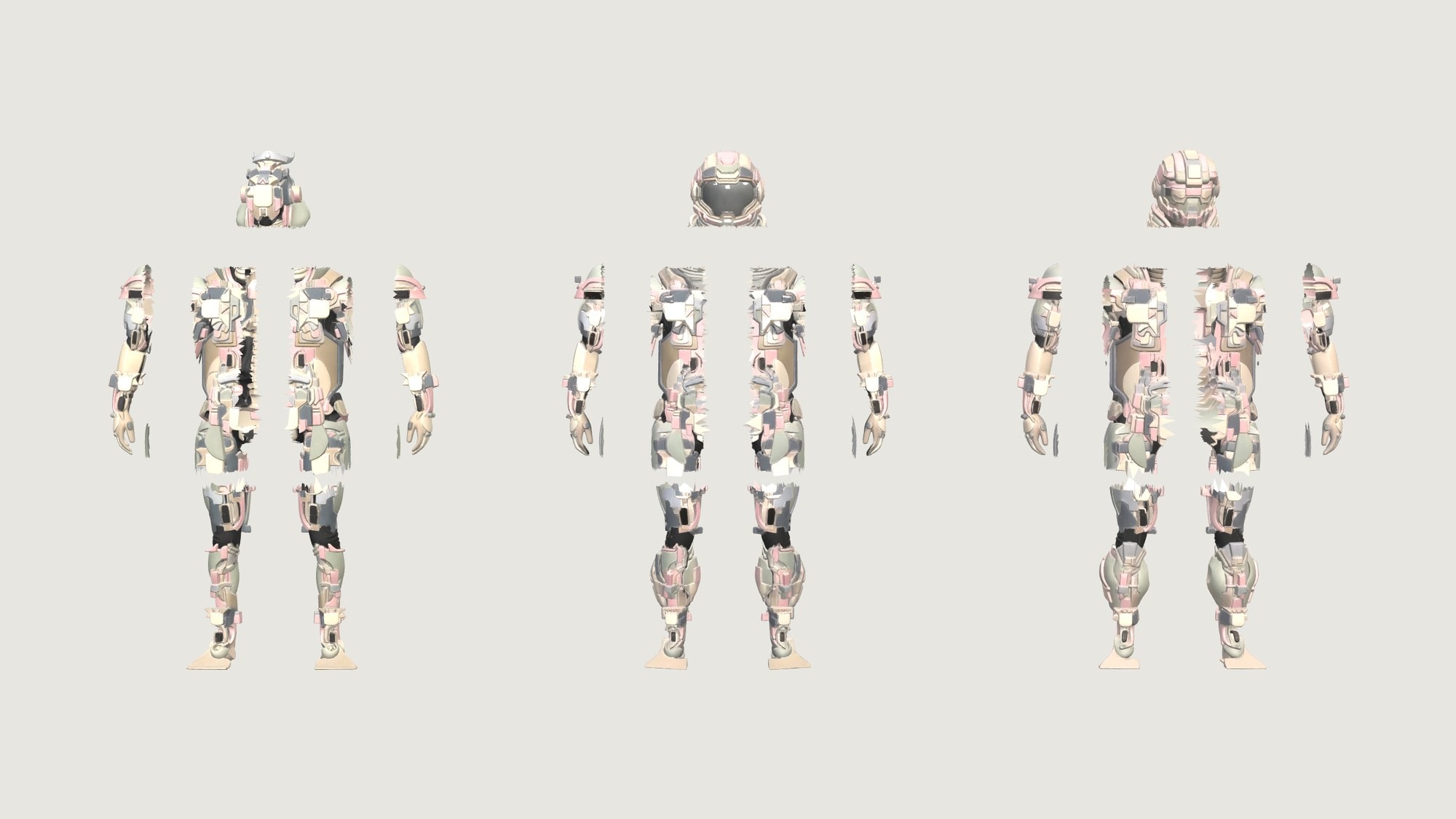
Each one is a one-time purchase that comes with its license, people buy with a card, and agents buy in USDC. Everything is at aremes-enterprises.com/logistics-robotics.
What Comes Next
I walked from the dock, through the yellow door, onto the floor, and stood at station 04 watching a pair of shoulders swing in and lock. This morning that floor did not exist.
So tell me. What should the line make next?
AREMES HQ, Brooklyn.


