

American Sign Language (ASL) in Public Space: Graffiti, Culture, and Connection
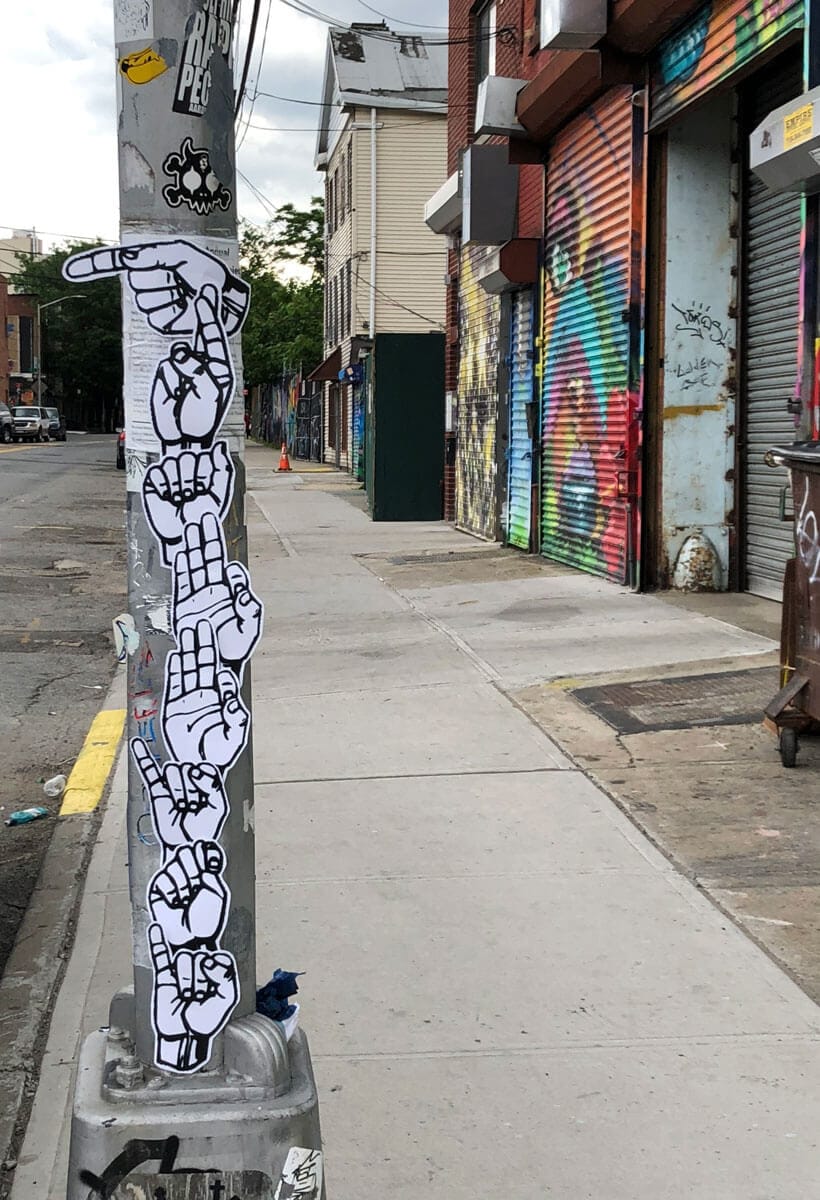
In 2020, I participated once again in the Welling Court Mural Project in Astoria, Queens, a project I’ve been proud to contribute to for many years. That year, I felt a strong urge to weave American Sign Language (ASL) into the fabric of the streets of Astoria, to create something that could merge the worlds of graffiti, accessibility, and community connection. This was the earliest intervention of the idea. It was pretty immediate and felt similar to mark making on a surface.
Using graphic images that I enhanced, printed and cut out, the ASL letterforms spell the word “graffiti”. I placed them across the walls and surfaces of the neighborhood. Each handshape represented a letter, forming a bridge between visual language and street culture. These pieces were intended as temporary installations, but they resonated long enough to be photographed, shared, and remembered by those who encountered them. I remember also preparring the hand shapes that spelled “communication” but never got to place those due to some rain.. Perhaps Ill re-spark that idea up again.
It wasn’t just about placing art into the streets, it was about adding another layer of communication, one that could be felt even if not traditionally “read.” Many passersby stopped, took photos, asked questions, and engaged with the idea, which made the project feel alive and collaborative. I believed in the value of how this idea could help shape and transform a public space.
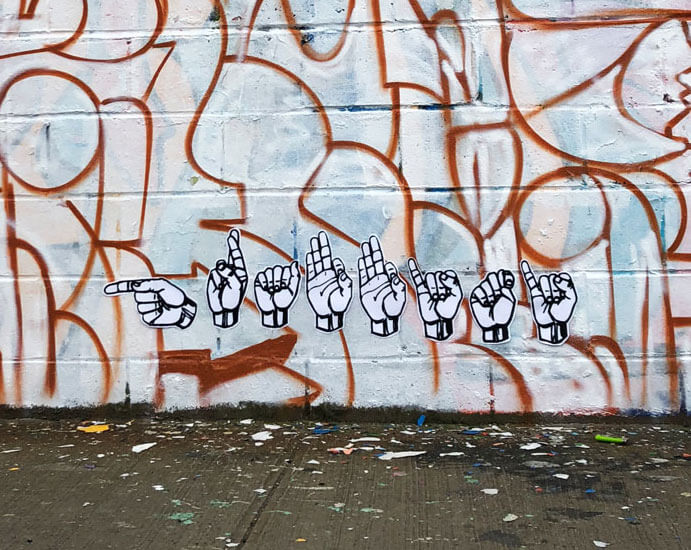

A few years later, closer to where I live in Brooklyn, I expanded on this idea. I created another ASL piece that spelled “graffiti” and placed it among the colorful, constantly evolving throw-ups and tags of the borough. Brooklyn’s raw visual energy is a perfect canvas for continuing the conversation that began in Queens. This piece above by far has a direct contect and dialog happening. I hand painted and cut this piece out to give a floating signage like feel. I mounted the piece in broad daylight and captured the documentation. The piece disapeared within a day and the wall itself was buffed over with a fresh rival throwie.
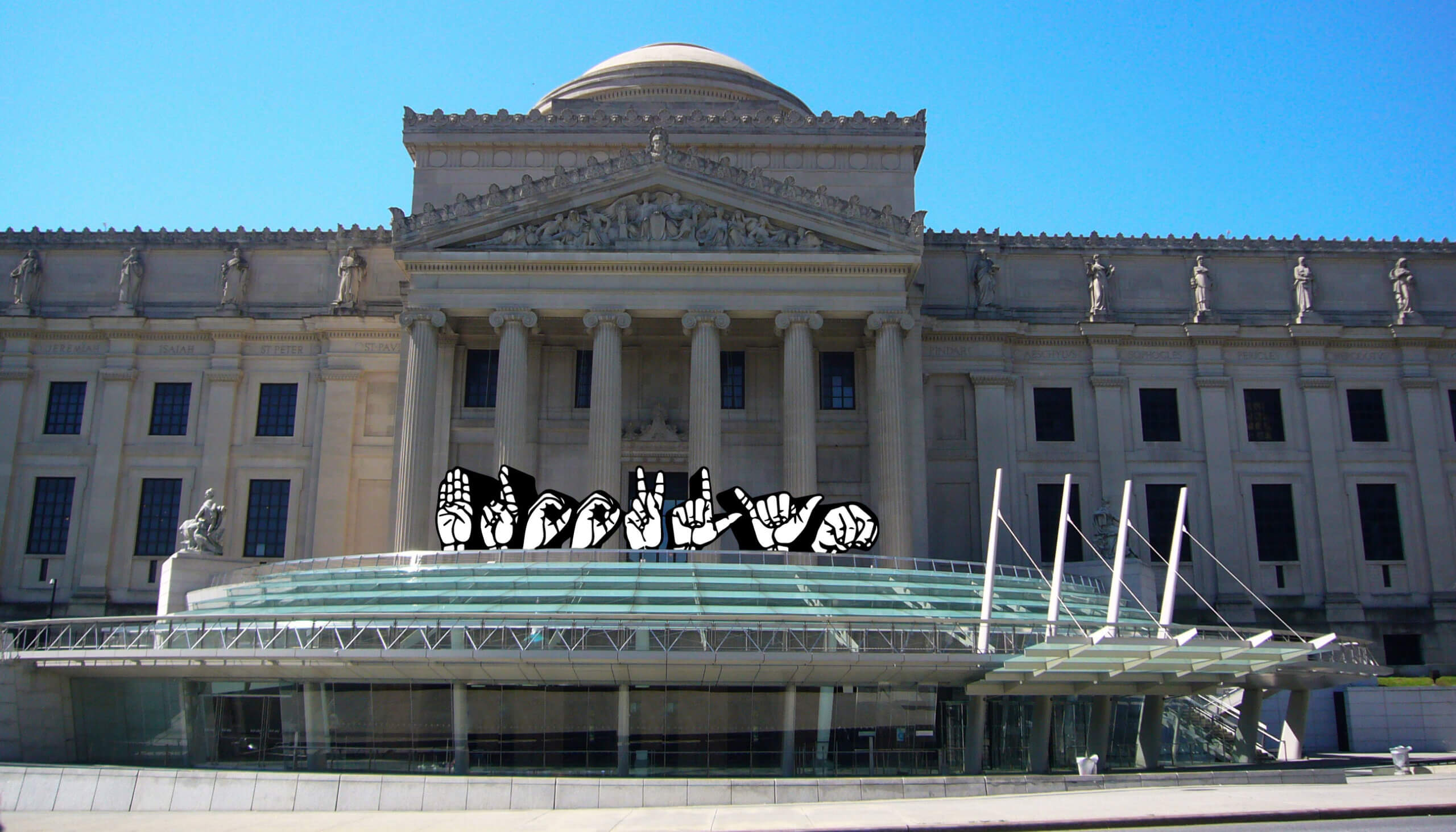
As the work evolved, I began to imagine an even larger scale for this series, one that could integrate more formally into landmark spaces. I created concept artworks envisioning ASL sculptures (or flat planes painted as 3D hand-shapes) that spelled out “Brooklyn” itself, installed in two iconic locations: the entrance of the Brooklyn Museum and the open fields of Prospect Park during the autumn season (How cool would it be to see the seasons change with this piece in place!). These concept pieces are a glimpse into a future where public art doesn’t just decorate, it invites, it communicates, and it transforms the space into something inclusive for all.
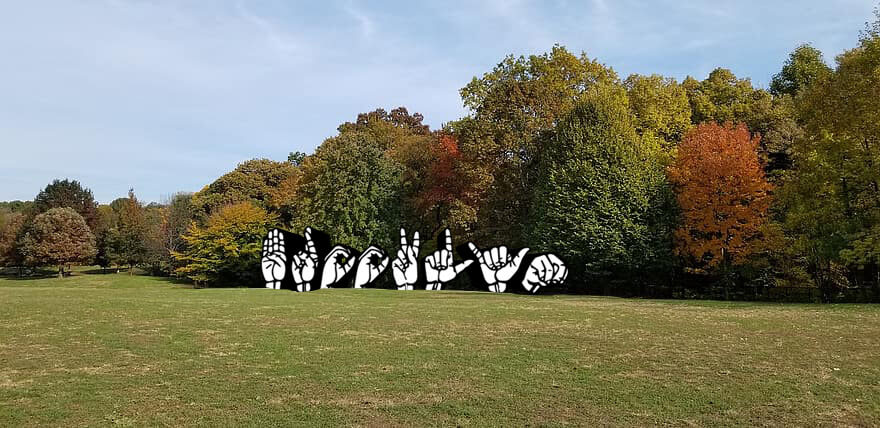
The heart of this series is about expanding how we think about communication, public space, culture, and accessibility. It’s about blending worlds, graffiti, public art, ASL, and community into one visual experience.
Imagine visitors encountering these installations while wandering the museum grounds or strolling through the park: no need for spoken words, just a shared moment of connection through art.
Language is alive. Art is alive.
When we fuse them together, we create new portals for understanding, storytelling, and belonging.


