
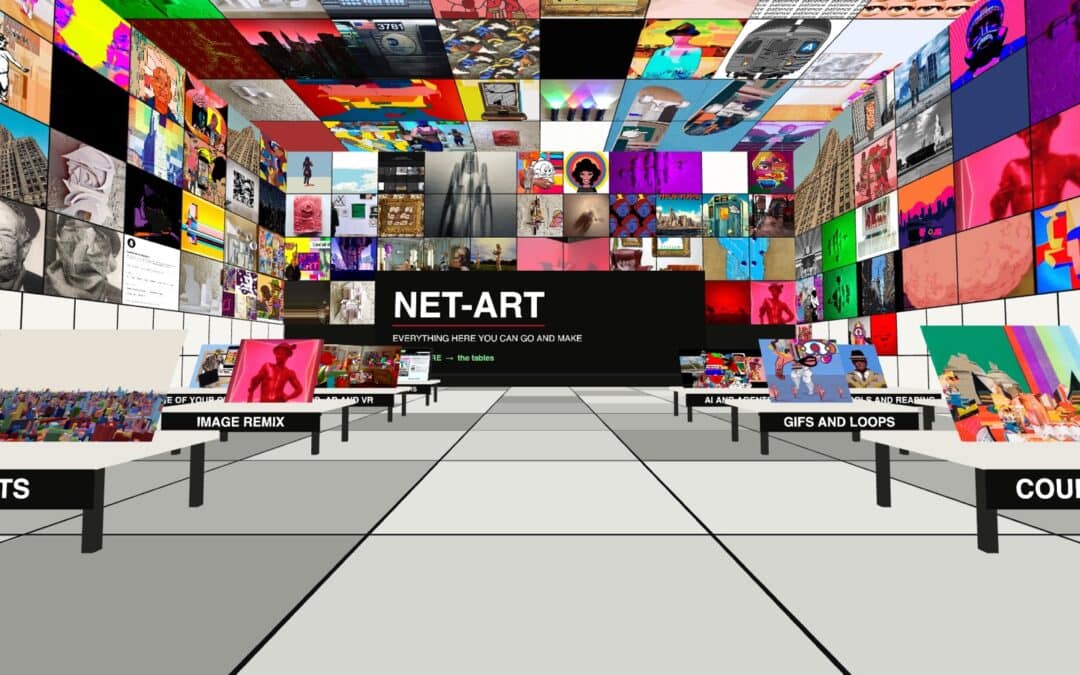
There are fourteen long tables in the room I built.
They stand in two blocks with an aisle between them. Each one carries a section of the course, laid flat and angled up so you can read it standing. The walls around them are covered edge to edge with pinned work, three thousand two hundred and sixty nine pieces of it. You walk in through a door at one end and the whole thing is in front of you.
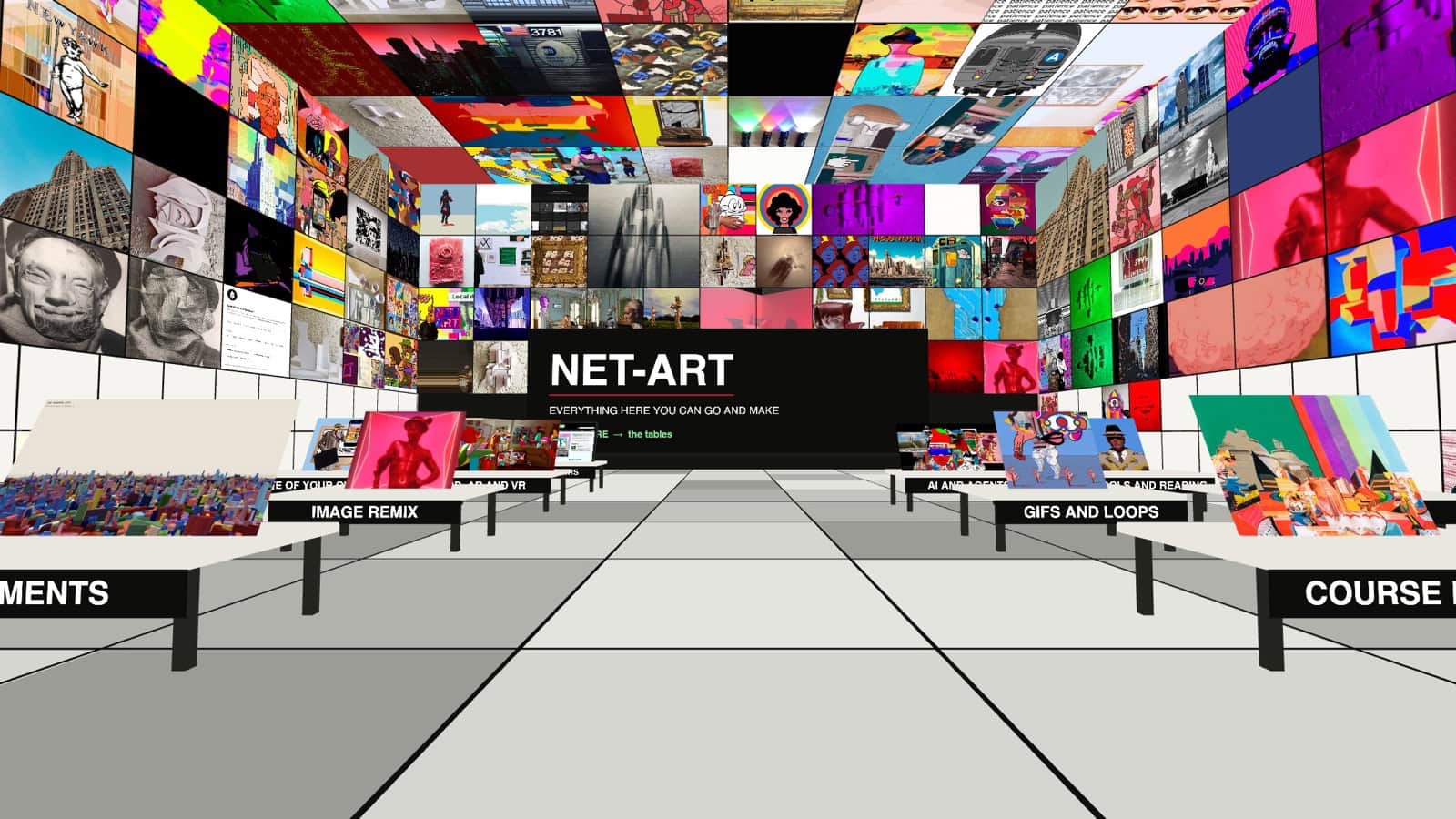
I built that in a browser over the past two weeks and I did not see what it was until Tuesday.
It is my grandfather’s cutting room.
Waste into value
He ran a textile recycling business out of Brooklyn starting in the fifties, serving the garment district. Fabric remnants came in. Offcuts, scraps, the leftovers of other people’s finished work. He sorted them, baled them, and sent them back out to be used again. Waste into value. That was the whole operation and it fed a family.
I spent summers and weekends in those rooms as a kid. Long tables running the length of the floor. Paper patterns pinned up on the walls. Geometric shapes everywhere, in piles, in stacks, cut and waiting. I could not hear most of what was being said in there. So I read the room instead. Pattern before narrative. Form before meaning.
Nine years of a course archive is offcuts. That is exactly what it is. Six hundred posts made for one Tuesday each, one assignment each, one student’s question each, and then left where they fell.
Sort them. Bale them. Send them back out to be used again.
Go in. It opens from that link, in a browser, on the phone in your hand. No install, no app store, nothing to download. If you have a headset you walk instead of look, and on my Quest 3 it holds a median of eighty five frames per second.
My grandfather sorted fabric. My father worked in systems. I got fragments.
That is the line I keep landing on and it took me about forty years to be able to say it plainly.
waste → value
material → systems
fragments → culture
archive → intelligence
memory → museum
Same operation, three generations, different material. I am not being poetic about this. I am describing a family business.
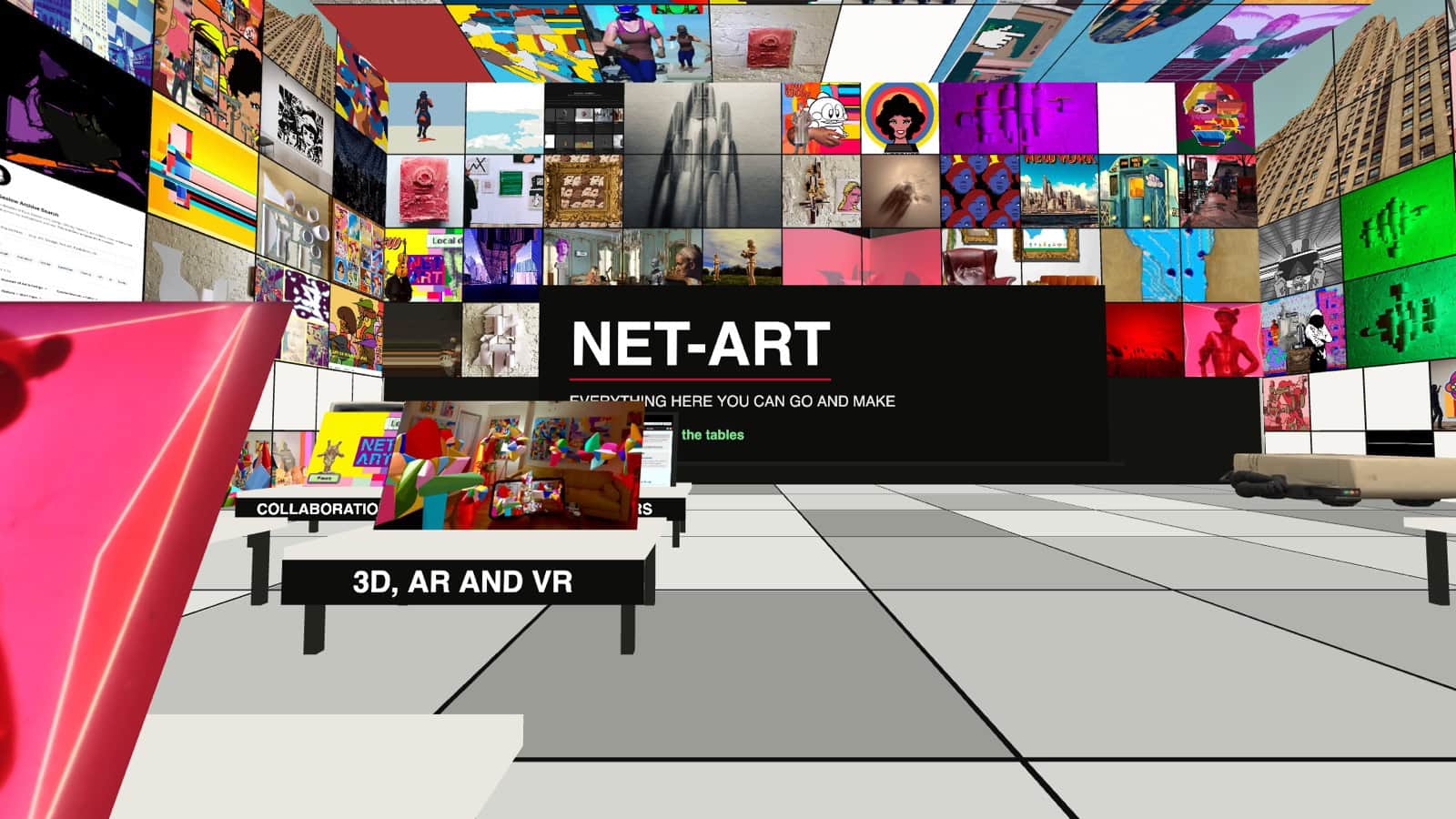
The tables in the classroom are the tables in the cutting room. The work pinned across the walls is the paper patterns pinned across the walls. I did not design that as a reference. I built what a room is supposed to look like, and it turns out I have known what a room is supposed to look like since I was eight years old.
Three sites, one operation
People ask me why I run what looks like three separate things, so here it is.
This site, and the museum inside it. RSMAD is where the practice lives. Forty years of work, and a stated refusal: I have never seen the work as a collection of static pieces sitting in a white room. I said that in January and then spent the year proving it. A museum here means memory turned into a place you can enter, not objects behind glass.
NET-ART, on the CUNY Academic Commons. Where the teaching lives, and has since 2017. Public from the first day. Every assignment, every tutorial, every broken experiment, free to anybody who wants it, no login, no course code.
And now the rooms, at ryanseslow.com/xr/, which is where those two finally touched. The teaching stands up. The practice gets walls. The archive stops being a list and becomes a building.
What is actually inside
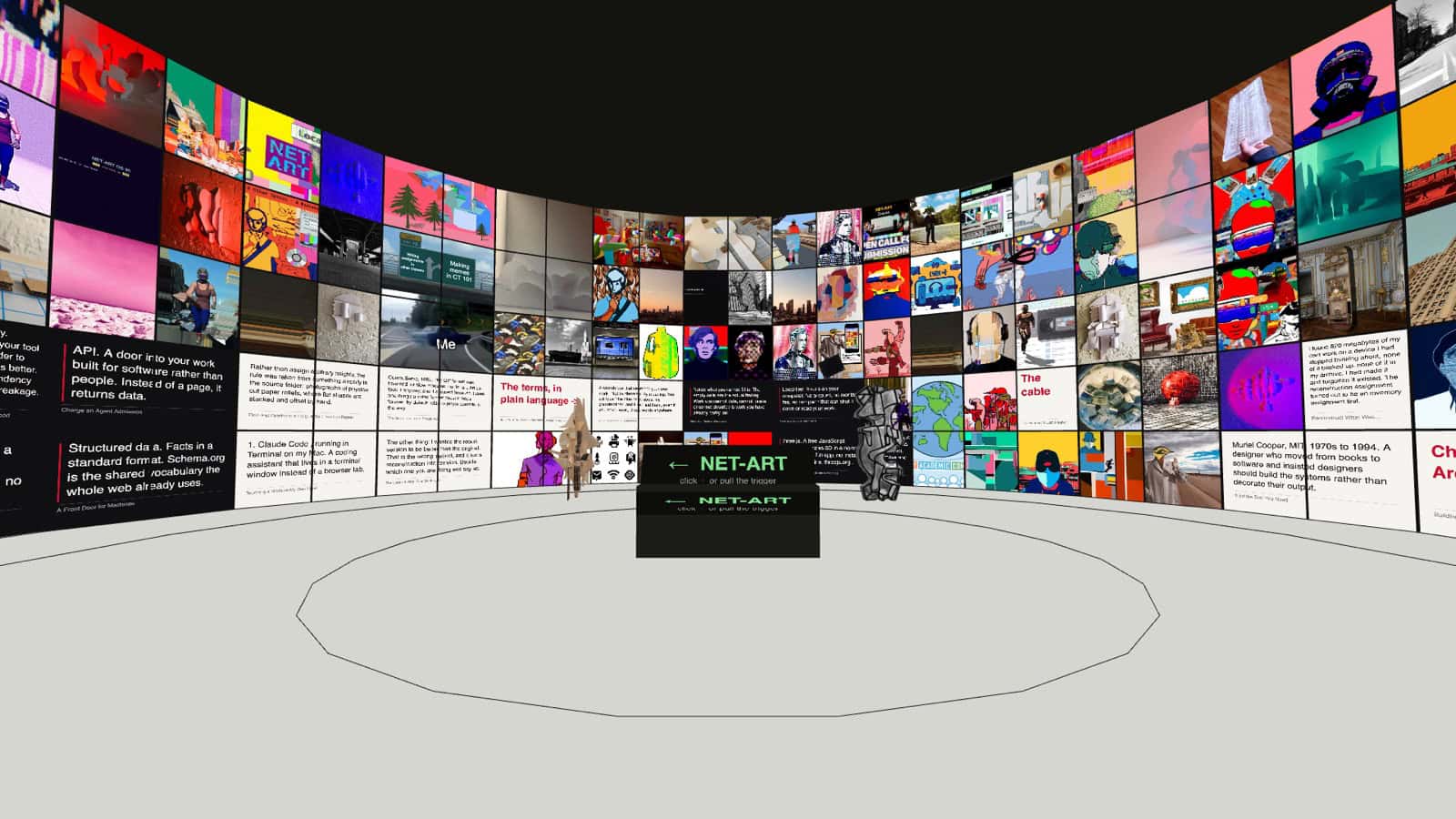
Fifteen rooms. One for every section of the NET-ART site, and each one is cut to a different floor plan because the shape is the argument.
Gifs and Loops is a circle. A loop is the thing you come back around to, so I gave it no corner to stop at. Collaborations is a five pointed star, separate points meeting in one middle. Paper and Light is a triangle, which is a prism. A Site of Your Own is a square, because that is a page and that is a window. Assignments is a hexagon, a honeycomb of cells.
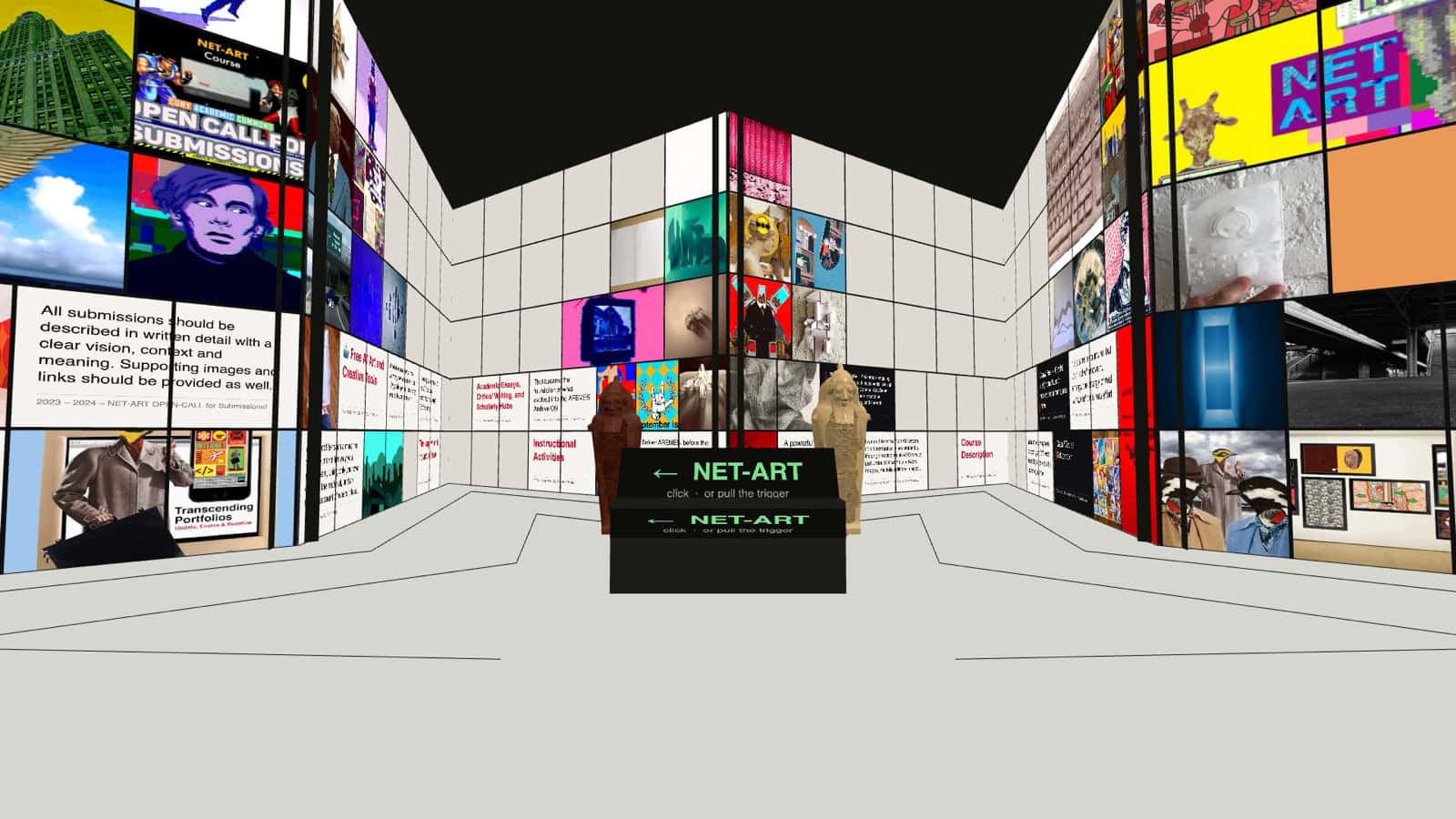
Every room splits at three point four meters. Below that line is reading height, and that is where the actual writing lives: the real steps and the real paragraphs, pulled out of the actual posts, each panel naming the post its words came from. Above the line the work hangs the way work hangs in a gallery.
You read at eye level. You look up at the pictures.
Eight hundred and fourteen works on the walls, every one of them chosen by hand out of eleven hundred and twenty, because a course media library is full of student work and that is theirs, not mine. Thirty one sculptures standing in the rooms, squeezed nine to one so they arrive as a link instead of a download.
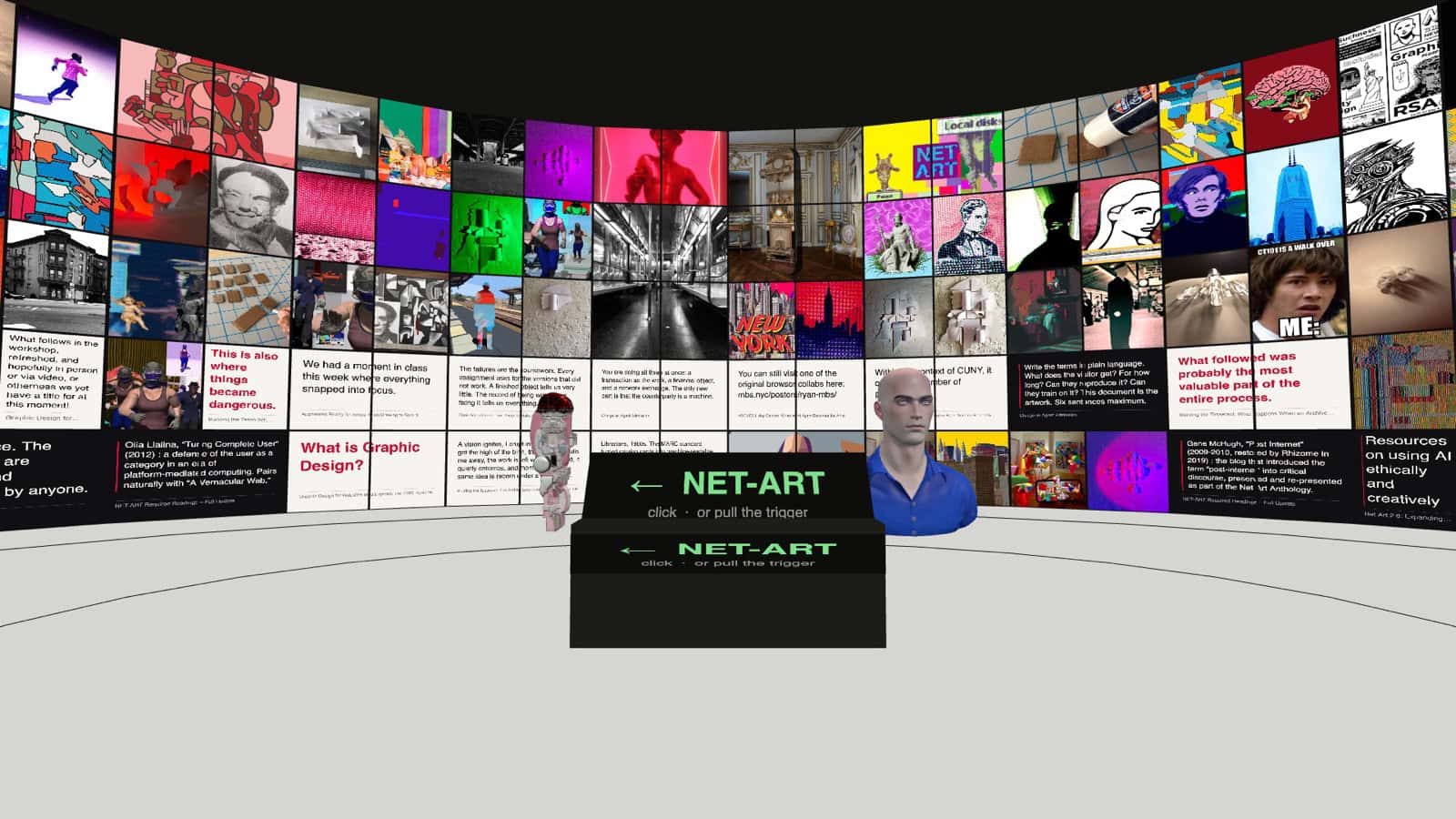
Walk it: ryanseslow.com/xr/
It has been one project since January
I did not know that either. Every few weeks I thought I was starting something new.
In January I thought I was building a conveyor belt for GIFs. In May two works stood up that you could step inside, and I wrote a sentence I still believe: this is not a video of a 3D object, this is the actual object. A week later the studio turned into VR and the wall stopped being the edge of the painting.
Then the archive learned to read. A semantic system over twenty years of WordPress. NET-ART OS. The Tesseract, where I caught the machine telling me beautiful things that were not true and learned the rule that has governed everything since: convincing stories are not the same as evidence. Then it learned to search, see and talk back.
In June I put ten years of browser work in one exhibition and wrote the thesis under all of it. A platform is a studio, not a museum. The art outlives the studio only if the artist carries it out.
In August I sat down at seven in the morning and built something I had already built twice without knowing it. Then I plugged a headset into the terminal and asked whether I could walk into my own archive. Then twenty of my paintings stood up as a city, which took five rebuilds and four of them were wrong.
Every one of those felt like a fresh start. None of them were. They were all the cutting room.
The front door, if you only open one thing
Everything Here You Can Go and Make.
Nine years of NET-ART sorted by what you make. Assignments, projects, paper and light, drawing and design, image remix, gifs and loops, writing, building a site of your own, 3D and AR and VR, AI and agents, tools and reading, collaborations, and a whole section for teachers. Open, free, and yours to run in your own classroom without asking me first.
That page is also the floor plan. The fourteen sections of MAKE are the fourteen tables in the room, and every table is a door.
If you want the machinery, I wrote it all down on the course site: How the NET-ART Rooms Are Built. Every version number, the six files that hold the entire building, the measured frame rate, and all six things that broke.
Come in
An archive is not a storage problem. It is a place, and it only stays a place if somebody keeps cutting doors into it.
My grandfather never threw the offcuts away. He could see what they still were.
Go and walk through it. Then tell me what you would put in a room.


